
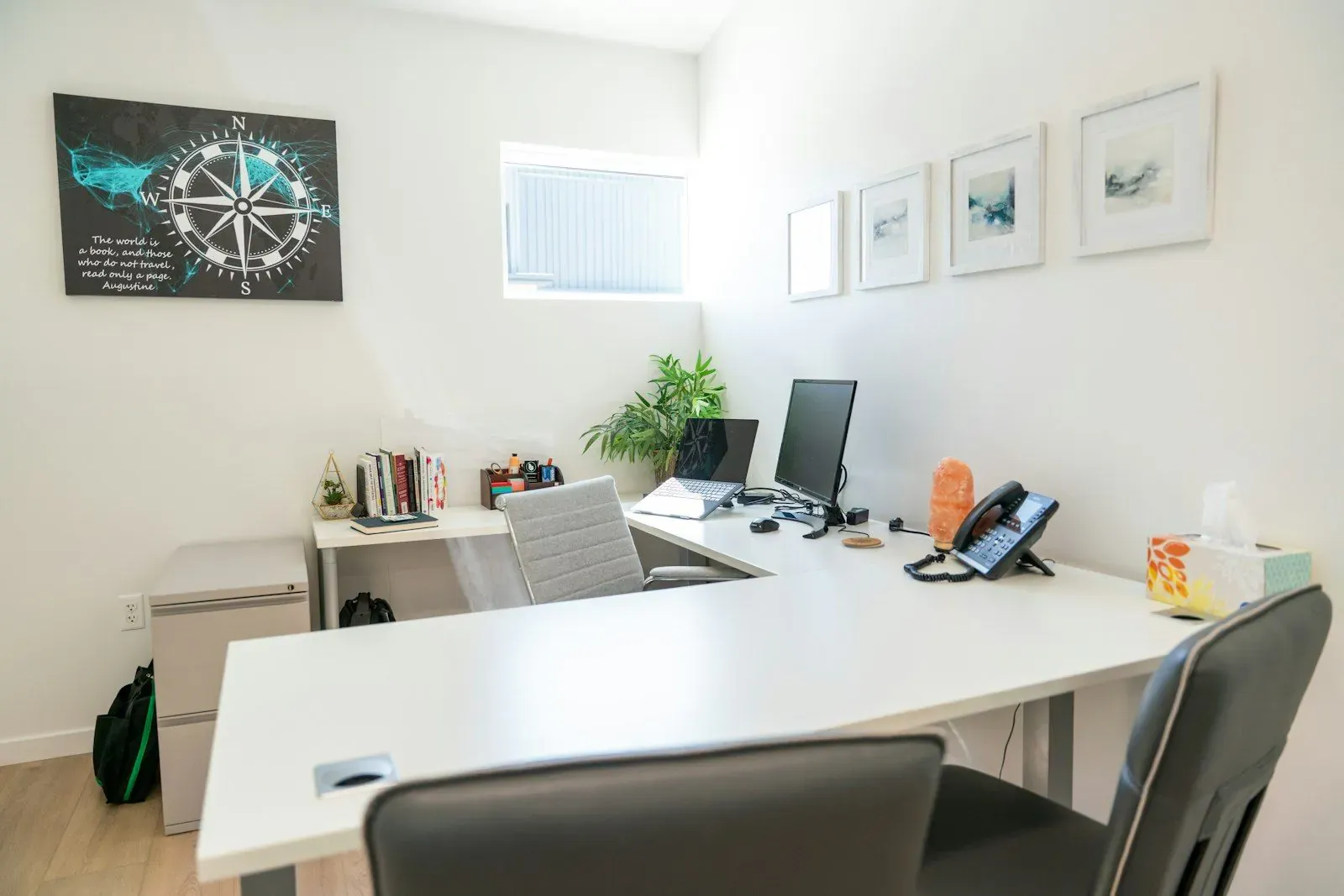
Start With How Teams Actually Work
The best office designs come from observing how a team actually moves through a day, not from a generic layout template. Quiet focus work, collaboration, and casual conversation all need different kinds of space.
We usually start by watching a normal week. How often people meet, how long they focus, and where they drift for a quiet moment says more than any headcount spreadsheet.
An office should be planned around how people work, not around how many desks fit.
Space Planning for Multiple Modes of Work
Good space planning zones an office so that a phone call in one corner doesn't disrupt focused work in another, while still keeping teams connected rather than isolated.
Getting those zones right is mostly about distance and buffers, not walls. A storage run or a planted divider often solves what an extra partition cannot.
- Focus areas for deep, uninterrupted work
- Collaboration zones sized for real team numbers
- Quiet rooms for calls and difficult conversations
- Social space that is not the corridor
Technology Woven Into the Design
Smart home integration principles apply just as well to offices, lighting, climate, and booking systems that respond automatically reduce friction and let a space adapt to how it's actually used throughout the day.
Planned late, it shows. Trailing cables, a screen mounted where the light hits it, and a meeting room that needs an adaptor are all symptoms of technology treated as an afterthought.
Lighting That Supports a Full Workday
Consistent, well-layered lighting reduces fatigue over a full workday far more than a single bank of overhead fixtures, and it's one of the most cost-effective upgrades in an office fit-out.
Daylight should carry the morning, with artificial light filling in rather than competing. Warmer levels late in the day help people wind down instead of leaving overstimulated.
Daylight First
Desks placed side-on to a window get even light without glare on screens, which is usually better than any fitting you can add.
Layers for the Afternoon
Task lights let individuals adjust their own area, so the whole floor does not have to be lit to the brightest person's preference.